4.2★
App Store rating after redesign shipped
Role
UI/UX Design Intern
Timeline
June – Sep 2024
Tools
Figma
Team
engineer
product manager
product designer


Digital Pool connects 18,000+ players to pool tournaments worldwide.
Every card varied in layout, sizing, and structure.
Important information like prize amount, entry fee, and game type was difficult to parse quickly, creating a chaotic browsing experience at scale.
Previous tournament cards varied wildly in size from event to event.
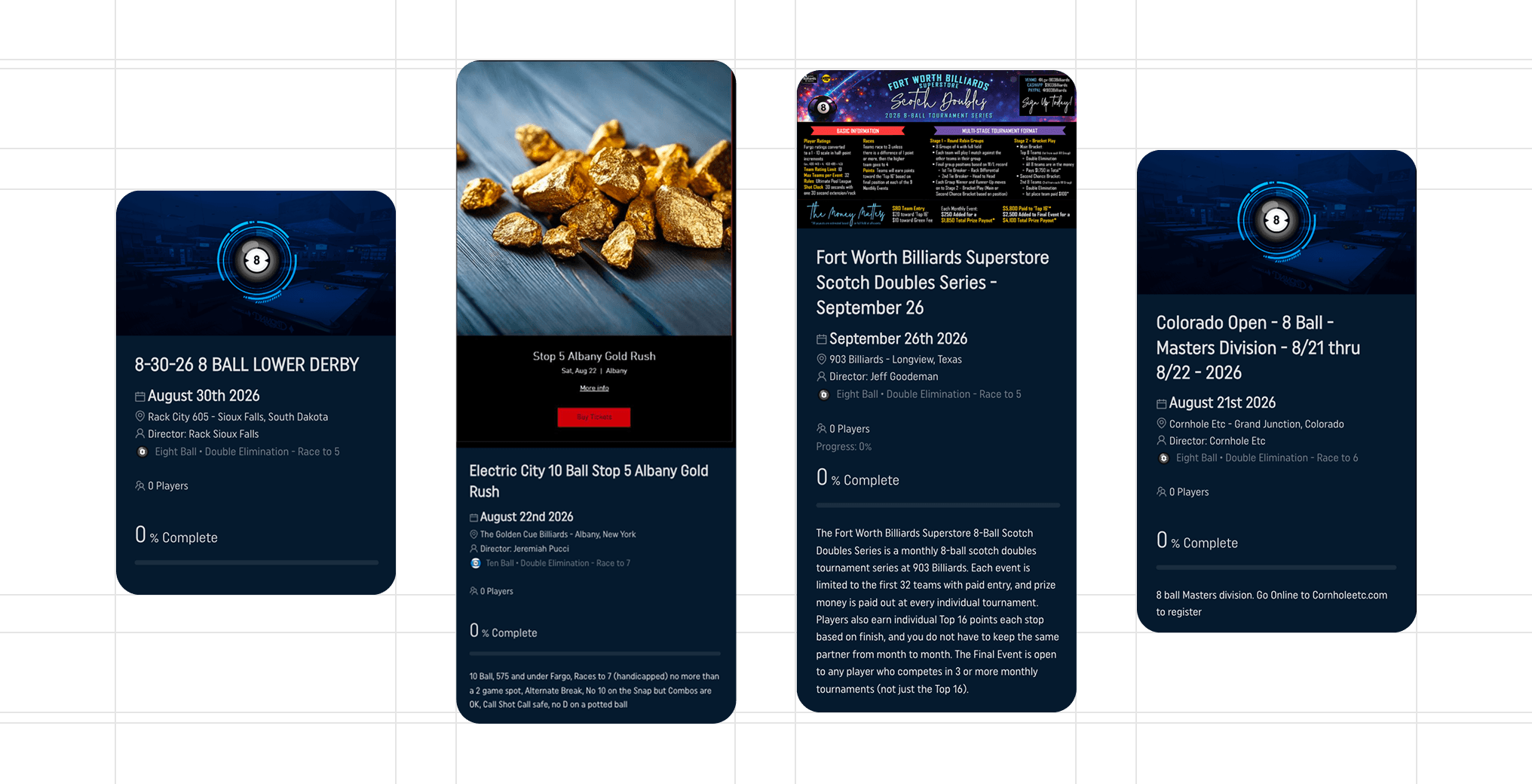
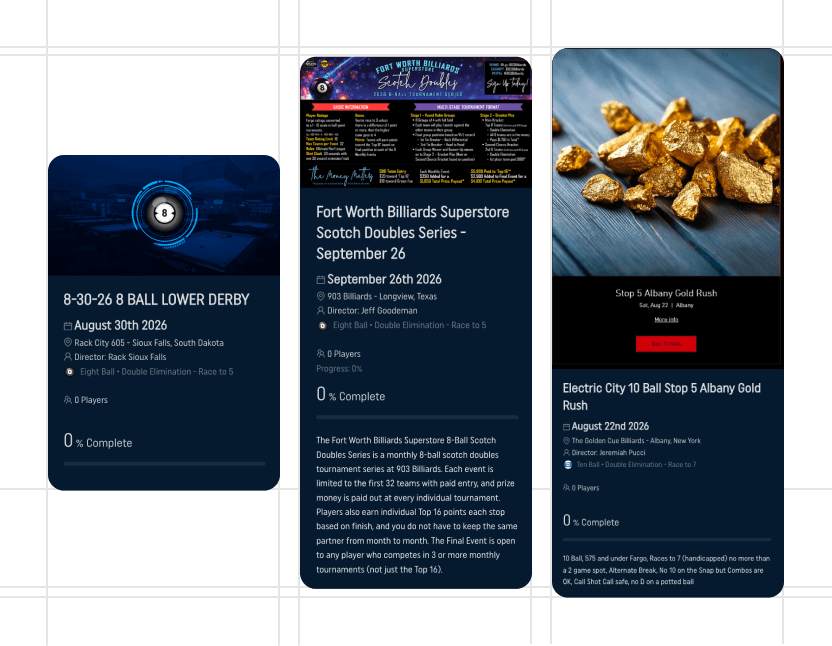
Redesigned the tournament card to be structured, scalable, and data-flexible.
As the UI/UX Design Intern, I redesigned the tournament card system.
I focused on building a clearer information hierarchy that helped users compare tournaments at a glance.
The goal was not just visual consistency, but to make browsing faster and more reliable.
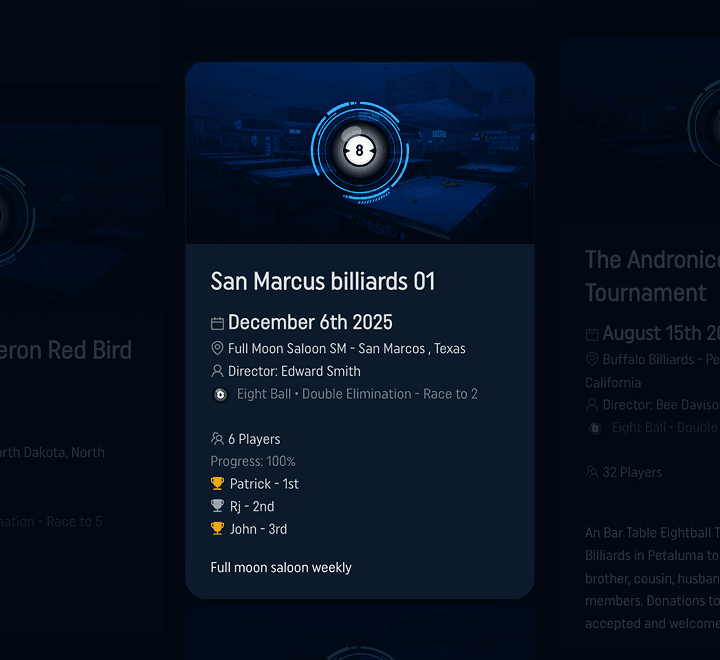 BEFORE
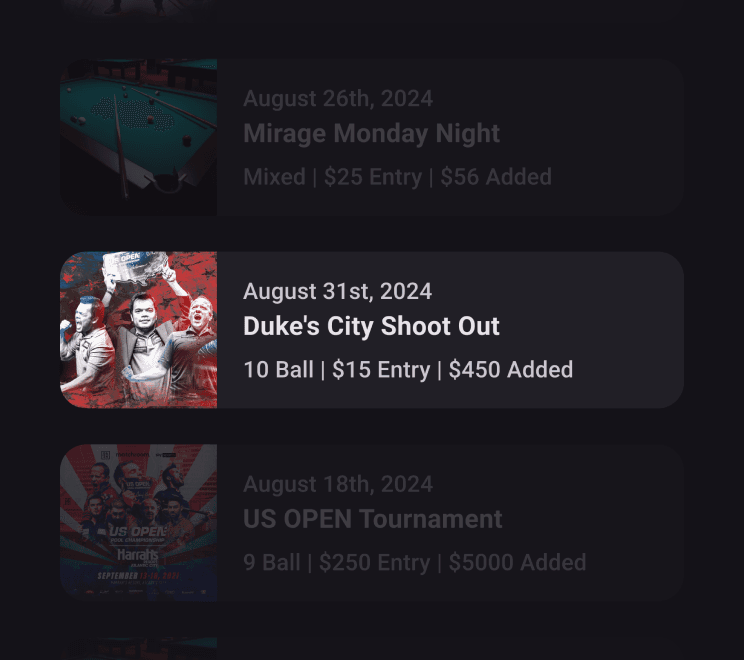 AFTER
AFTERI explored several directions before arriving at the final design.
Each iteration exposed different tradeoffs between clarity and technical constraints.
I balanced user feedback with engineering limitations like performance to shape the final experience.
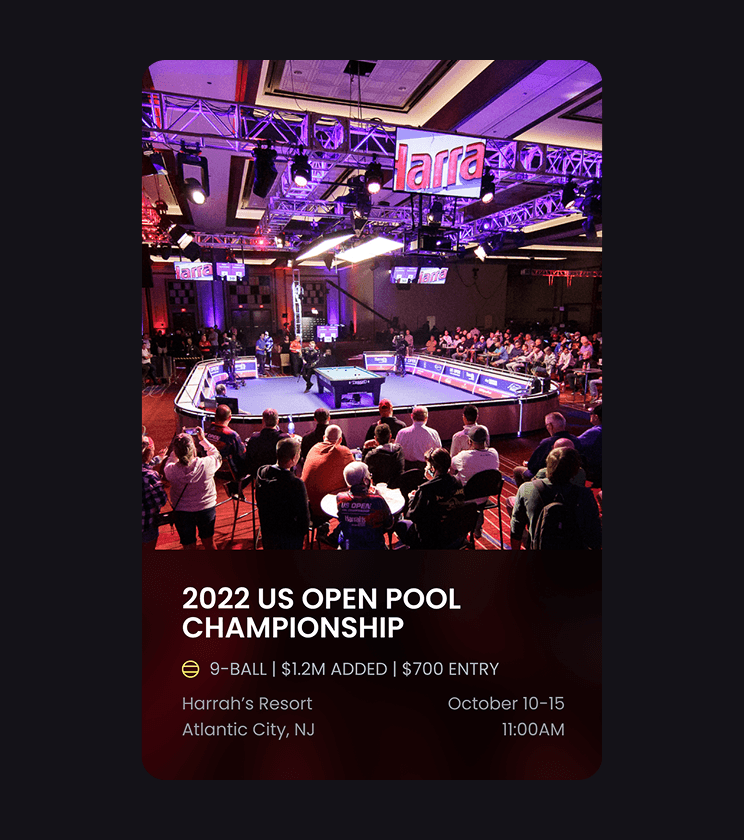
First iteration, focused on testing basic structure and information grouping.
Cards were too tall to scale across 45,000+ tournaments.
Scrolling through a feed of vertical cards made the browsing experience even more overwhelming.
The vertical structure created unnecessary friction and reduced scanability.
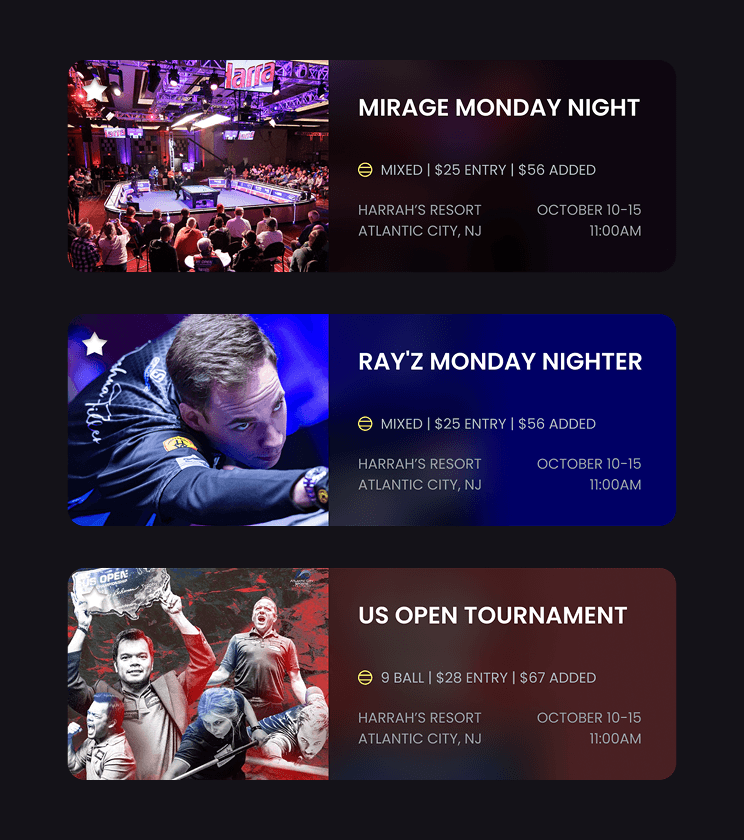
Second iteration, shifting to a more compact structure.
Engineers flagged performance concerns.
Gradients slowed rendering on a high-frequency browsing interaction.
Performance constraints pushed the design toward a simpler direction.
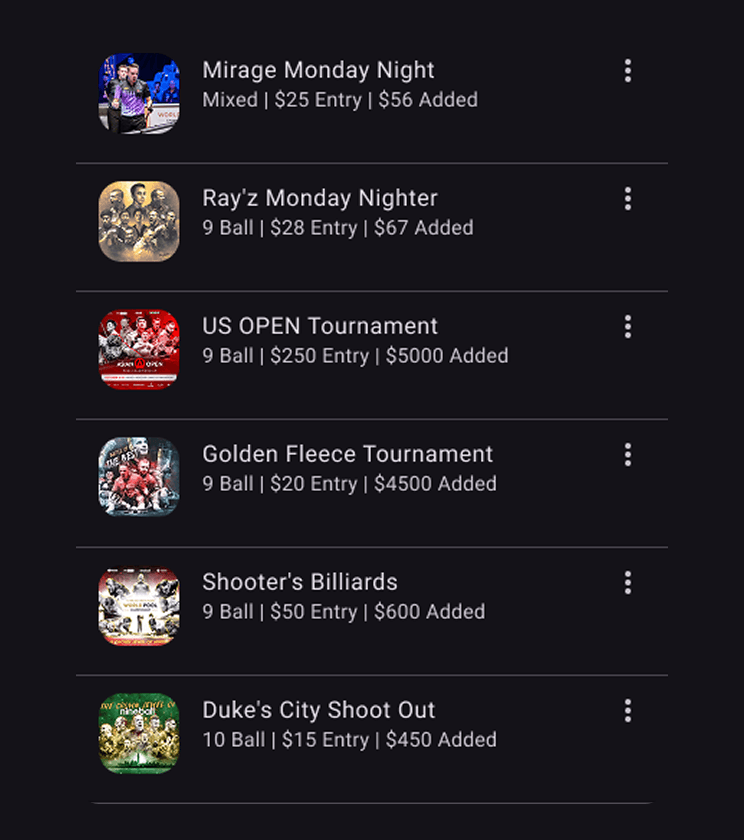
Engineering pushed for heavier use of native Material 3 components to simplify implementation.
Met engineering requirements.
In user testing, users still struggled to scan key details and hesitated before registering.
Meeting system constraints alone wasn’t enough.
I walked engineers through user testing results and articulated where M3 fell short.
We aligned on a custom card that reused core M3 components.
Performance preserved.
Scanability improved.
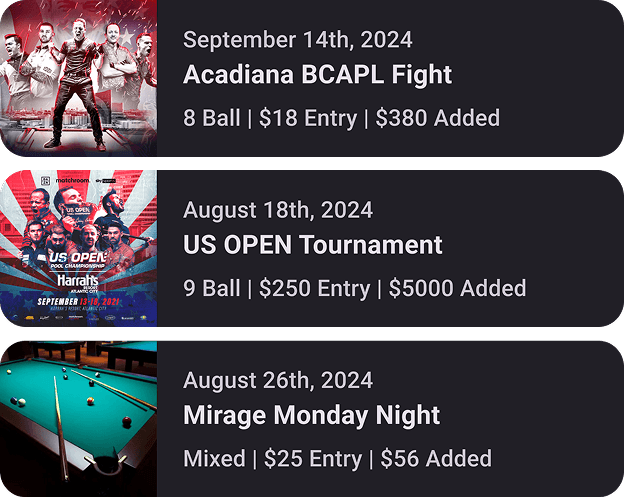
The final solution improved browsing clarity across 45K+ tournaments.
Even the smallest components deserve systems thinking.
App Store rating after redesign shipped
Tournaments now displayed with one consistent card
Players browsing tournaments through the redesigned experience